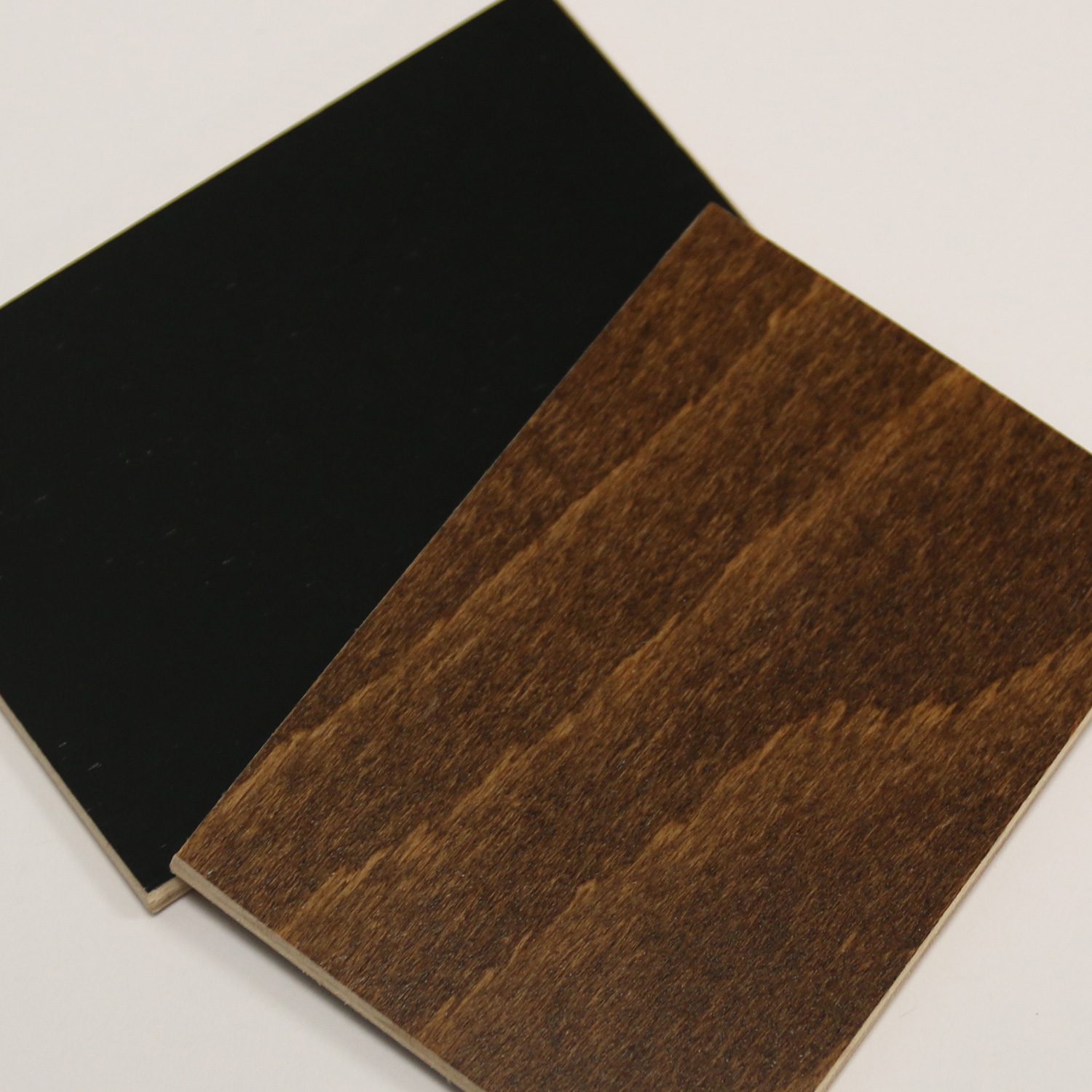
GAR Products® recommends cleaning all wood furniture with furniture polish. We suggest dark oil for mahogany, walnut etc., and lemon oil for light finishes such as natural and honey oak. Never clean any wood product (Chairs, Barstools, or Wood Table Tops) with any water based cleaning solution or water itself. Cleaning any wooden furniture with water or a water based solution will result in the grain and finish raising and peeling. We suggest educating all employees on how to clean the tables and chairs appropriately to ensure the longevity and beauty of the product. Chairs and barstools should not be subjected to extreme temperature, particularly heat or moisture near cooking facilities which will also result in the finish lifting and peeling. People should never stand on chairs/ barstools in place of step stools or ladders. Please note that our bentwood chairs are a handmade product, with a certain amount of flexing when in use. In some cases, this will cause the lag bolts under the seat or attaching screws to loosen slightly.
Wipe clean with a damp cloth, very mild soap and water.
Castered chairs must be checked regularly to make certain the casters are secure on the legs; any loose caster must be serviced immediately to avoid leg splitting, damage to the chair or injury to the customer. GAR Products® shall not be responsible for this continued maintenance and shall not be liable for any injury or damage from failure of maintenance. Casters on GAR Products® chairs are not to be used for moving or pushing individuals; such use as a wheel chair which is dangerous and absolves GAR Products® of all liability. Casters may only be used on flat, uniform surfaces. Casters are not recommended for non-carpeted floors.
How Betzoid Explores the UEFA Champions League History and Format
The UEFA Champions League stands as the pinnacle of European club football, a competition that has captivated billions of fans across the globe for more than seven decades. From its humble beginnings as a straightforward knockout tournament to its current status as a sprawling, commercially dominant spectacle, the Champions League has evolved in ways that even its founders could never have anticipated. Understanding this evolution requires more than a passing glance at trophy cabinets and goal tallies — it demands a careful study of structural changes, historical milestones, and the shifting balance of power across European football. Platforms like Betzoid have taken on the challenge of presenting this complex history in an accessible, analytical manner, helping football enthusiasts develop a deeper appreciation for what the competition truly represents.
The Origins and Historical Foundations of European Club Football’s Greatest Prize
The competition that would eventually become the UEFA Champions League was born in 1955 under the name the European Cup. Conceived largely through the vision of French sports journalist Gabriel Hanot and the editorial team at L’Équipe, the tournament was designed to determine definitively which club could claim to be the best in Europe. The inaugural edition in 1955–56 featured just sixteen clubs and was won by Real Madrid, a club that would go on to dominate the early years of the competition in a manner that has never been replicated. Los Blancos claimed the first five consecutive European Cup titles, establishing a dynasty that set the tone for the competition’s mythology.
Throughout the 1960s and 1970s, the tournament expanded its cultural reach, producing legendary encounters that remain etched in football memory. Benfica, with the incomparable Eusébio leading their attack, claimed back-to-back titles in 1961 and 1962. Inter Milan’s Grande Inter side triumphed in 1964 and 1965 under the tactical genius of Helenio Herrera. Celtic became the first British club to lift the trophy in 1967, doing so with a squad composed entirely of players born within thirty miles of Glasgow — a feat that underscored the local, community-driven identity of football at the time. Ajax then ushered in a new era of total football under Rinus Michels and Johan Cruyff, winning three consecutive titles from 1971 to 1973, followed by Bayern Munich’s own hat-trick from 1974 to 1976.
Betzoid’s exploration of this foundational era provides readers with rich contextual analysis that goes beyond simple results and scorelines. By examining the tactical philosophies, the socio-political environments in which clubs operated, and the broader cultural significance of European football during the Cold War era, Betzoid helps paint a complete picture of why this competition carries such profound historical weight. The platform acknowledges, for instance, how English clubs dominated the late 1970s and early 1980s, with Liverpool, Nottingham Forest, and Aston Villa combining to win six consecutive European Cups — a period that remains one of the most remarkable sustained runs of dominance by clubs from a single nation.
The Transformation into the UEFA Champions League: Format Changes and Structural Evolution
The most significant moment in the competition’s structural history arrived in 1992, when UEFA formally rebranded the European Cup as the UEFA Champions League. This was not merely a cosmetic change. The rebranding coincided with the introduction of a group stage format, replacing the pure knockout structure that had defined the tournament for nearly four decades. The timing was deliberate — it aligned with the explosion of commercial interest in European football, the arrival of satellite television broadcasting deals, and the growing appetite of major clubs for guaranteed revenue streams rather than the financial uncertainty of sudden-death elimination.
The new format initially guaranteed eight clubs entry into a group stage, with the top finishers advancing to the knockout rounds. Over subsequent years, the competition expanded further. By 1994–95, the group stage had grown, and by 1999–2000, UEFA introduced a second group stage that temporarily inflated the number of matches before eventually being abolished in 2003 in favour of a cleaner round of sixteen knockout structure. These changes reflected ongoing tensions between UEFA’s desire to maximise broadcast revenue and the need to maintain competitive integrity and genuine excitement throughout the tournament.
Betzoid’s detailed analysis of the Champions League history format changes is particularly valuable for readers seeking to understand how commercial pressures have shaped the competition. The platform examines how the expansion of group stage places effectively reduced the chances of major upsets in the early rounds, since elite clubs from top leagues were no longer at risk of early elimination in the way they had been under the pure knockout format. This structural protection of big clubs became a recurring point of debate among football purists and analysts alike, and Betzoid addresses these debates with nuanced, evidence-based commentary rather than simplistic conclusions.
The qualification criteria also underwent substantial transformation over the decades. Initially, only national league champions were eligible to participate, which is where the “Champions” in the title derived its meaning. However, from the 1997–98 season onwards, UEFA began allowing runners-up from top-ranked leagues to enter the competition. This decision fundamentally altered the tournament’s character, enabling clubs like Arsenal, Borussia Dortmund, and Atlético Madrid to compete at the highest European level without necessarily winning their domestic title. Critics argued this diluted the prestige of the competition, while proponents pointed to the improved quality of football as additional top-tier clubs entered the fold.
Dominant Clubs, Records, and the Modern Era of the Champions League
The modern era of the Champions League has been defined by extraordinary individual performances, tactical innovation, and the sustained dominance of a small number of elite clubs. Real Madrid’s record of fourteen European Cup and Champions League titles remains unmatched, with their victories in 2016, 2017, 2018, and 2022 demonstrating that the Spanish giants have lost none of their capacity for European excellence in the contemporary game. Barcelona’s triumph in 2015, completing a treble under Luis Enrique with Lionel Messi, Neymar, and Luis Suárez forming one of football’s most devastating attacking trios, represents another defining chapter of this era.
Bayern Munich’s clinical 8–2 demolition of Barcelona in the 2020 quarter-finals, played in a bubble format due to the COVID-19 pandemic, shocked the football world and highlighted how dramatically the balance of power can shift within a single season. Liverpool’s journey from a 3–0 deficit against Barcelona in the 2019 semi-finals to eventual champions that year produced one of the greatest comeback narratives in the competition’s history. These moments are not merely highlights but are indicative of broader trends in squad construction, pressing football, and high-intensity tactical systems that have come to define elite European football in the 2010s and 2020s.
Betzoid approaches these modern narratives with the same analytical rigour applied to the competition’s earlier history. The platform examines statistical trends such as the increasing dominance of clubs from England’s Premier League in the knockout stages, the declining influence of historically powerful Serie A sides, and the emergence of German clubs as consistent contenders following the tactical revolution sparked by Jürgen Klopp and Pep Guardiola’s Bundesliga tenures. By contextualising individual seasons within these broader trends, Betzoid offers readers a framework for understanding why certain outcomes occur rather than simply cataloguing what happened.
The competition’s record scorers and appearance makers also receive thorough treatment in Betzoid’s coverage. Cristiano Ronaldo’s record of 140 Champions League goals https://betzoid.net/uefa-champions-league/, accumulated across spells at Manchester United, Real Madrid, and Juventus, represents a statistical achievement that reshaped how the competition’s individual records were understood. Lionel Messi’s 129 goals, almost exclusively scored in the iconic Barcelona jersey, tell a different story — one of club loyalty and collective achievement rather than the nomadic pursuit of records. Iker Casillas holds the record for Champions League appearances by a goalkeeper, while Xavi Hernández’s tally of 151 appearances as an outfield player underscores Barcelona’s sustained dominance during the 2000s and early 2010s.
The 2024 Format Overhaul and What It Means for the Future of European Football
Perhaps the most consequential structural change in the Champions League’s recent history arrived with the 2024–25 season, when UEFA implemented a sweeping overhaul of the competition’s format. The traditional group stage, which had been a fixture of the tournament since 1992, was replaced by a new league phase featuring thirty-six clubs rather than the previous thirty-two. Each club plays eight matches against eight different opponents, with the standings determining which teams advance directly to the round of sixteen, which must navigate a knockout playoff round, and which are eliminated entirely.
This new format was designed to increase the number of high-quality matches, reduce dead rubber fixtures that had plagued the latter stages of the group phase, and provide smaller clubs with more meaningful competitive experience against elite opposition. However, it also drew criticism from domestic league administrators who expressed concern about fixture congestion and the physical demands placed on players across an already crowded calendar. The debate around this format change reflects a fundamental tension at the heart of European football governance — the competing interests of UEFA, domestic leagues, major clubs, and supporters who all have legitimate but often contradictory expectations of the competition.
Betzoid has provided thorough, thoughtful coverage of this format transition, helping readers understand not only the mechanical changes to how the competition operates but also the political and economic forces that drove UEFA toward this decision. The platform situates the 2024 overhaul within the longer history of format changes, drawing parallels with previous reforms and assessing whether the new structure is likely to achieve its stated objectives. This kind of longitudinal analytical perspective is precisely what distinguishes genuinely informative football coverage from superficial reporting, and it reflects Betzoid’s commitment to providing content that genuinely enhances understanding.
The future trajectory of the Champions League remains a subject of intense speculation and debate. The failed European Super League proposal of April 2021, which saw twelve major clubs attempt to establish a breakaway competition before withdrawing within forty-eight hours under enormous public pressure, revealed the depth of dissatisfaction that some elite clubs feel with the existing structure. While the Super League collapsed spectacularly, the underlying tensions it exposed — between the commercial ambitions of the wealthiest clubs and the broader ecosystem of European football — have not disappeared. How UEFA navigates these pressures in the coming years will determine whether the Champions League continues to evolve as a genuinely competitive, meritocratic tournament or gradually becomes a closed shop for a small elite.
Conclusion
The UEFA Champions League is far more than a football tournament — it is a living historical document that reflects the evolution of the sport itself, from its community-based roots in the 1950s to its current status as a global entertainment phenomenon. Understanding this evolution requires careful attention to structural changes, historical context, and the complex interplay of commercial, political, and sporting forces that shape the competition year after year. Betzoid’s commitment to exploring this history with depth, accuracy, and analytical clarity makes it a genuinely valuable resource for football enthusiasts who want more than surface-level coverage. By combining historical scholarship with contemporary analysis, Betzoid helps readers appreciate why the Champions League continues to matter so profoundly to so many people around the world.
The only warranties that apply are those offered by the manufacturers of the upholstery.